

Respiratory diseases – the most common infectious disease in humans
Every year, many people suffer from acute respiratory illnesses such as colds, bronchitis or sinusitis – especially in autumn and winter.
A viral infection is the most common cause of the common cold. Pathogens enter the body and infect parts of the respiratory tract, such as the bronchi. As a natural defense mechanism, the body mounts an inflammatory response, which is accompanied, among other things, by increased mucus production. This defense reaction leads to the typical and bothersome cold symptoms such as coughing, runny nose, sore throat, sinusitis, or pressure headaches.

Transmission via droplet infection
Infection occurs via droplets, contaminated surfaces, or hands. Rhinoviruses, a common cause of colds, can survive for up to two hours on hands and several days on surfaces. A person is usually contagious even before the first symptoms appear and for three to eight days afterward.
Especially during the winter months, people spend more time indoors and in close proximity to one another, which promotes the transmission of cold-causing pathogens. The cold winter weather can weaken the immune system, making one more susceptible to catching a cold.
The four phases of a cold
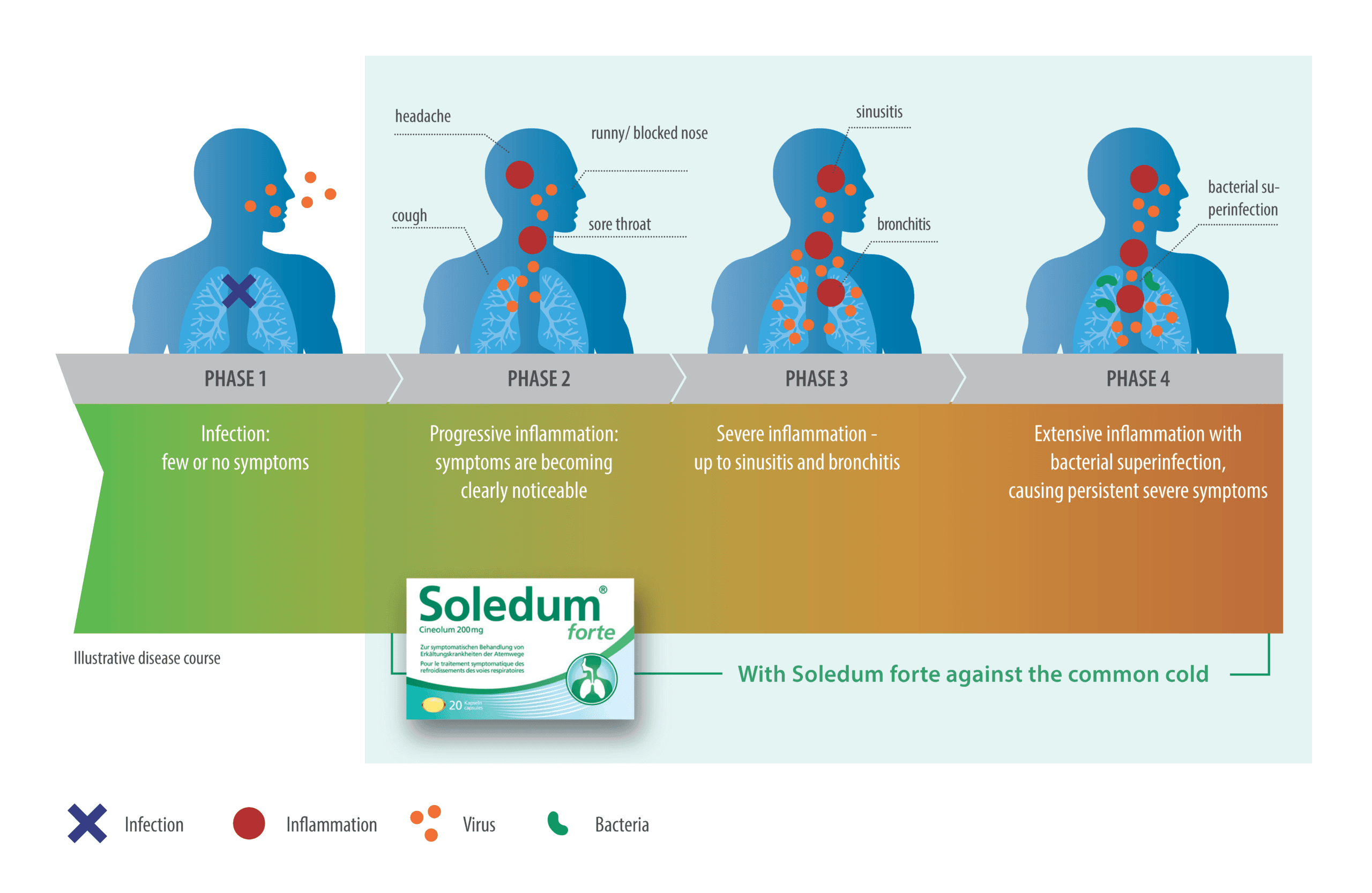
A cold spreads gradually through the body

-
First symptoms
Initially, symptoms often include a sore throat and a general feeling of illness. This is followed by a runny nose with nasal congestion, a blocked nose, and sneezing. -
Rhinosinusitis
Sensations of pressure or pain in the facial area -
Bronchitis
Transition to cough as the leading symptom, often initially dry, later productive and sometimes persisting beyond the subsidence of the other symptoms.